

Teal is a calm and eye-catching color that sits beautifully between blue and green. It has been admired for centuries in art, fashion, and design. The name “teal” comes from a small bird with a blue-green stripe on its head. Over time, this color became a symbol of balance, depth, and quiet confidence.
Spiritually, teal is often linked to peace, healing, and emotional clarity. Many cultures see it as a color of renewal and protection. It blends the calm energy of blue with the growth of green. Because of this, teal holds a special place in cultural traditions, creativity, and personal expression around the world.
The Origin and Definition of the Name “Teal”
The name Teal derives from the common teal, a small freshwater duck found across Europe and Asia, known for its distinctive blue-green plumage. As a given name, Teal emerged primarily in English-speaking countries during the late 20th century, reflecting the growing trend of nature-inspired names.
The word itself comes from Middle English “tele,” which has Germanic roots. The color teal, a cyan-green hue, takes its name from the colored patch on the duck’s head.
While relatively uncommon as a personal name, Teal has been used for both boys and girls, though it leans slightly feminine in modern usage. The name carries connotations of nature, tranquility, and the serene beauty of wetland environments.
Spiritual Meaning of the Name “Teal”
In spiritual contexts, the name Teal resonates with themes of emotional balance, healing, and communication from the heart. The teal color itself is associated with the throat chakra in Eastern spiritual traditions, representing truthful expression and inner wisdom.
Those named Teal are often thought to possess natural abilities in mediation and bringing harmony to conflicting situations. The duck that inspired the name is a migratory bird, symbolizing spiritual journeys, adaptability, and the courage to navigate between different realms or phases of life.
Water, the teal duck’s natural habitat, represents the subconscious mind and emotional depths in many spiritual traditions. The name suggests a person who can dive deep into emotional waters while maintaining grace and composure on the surface.
Meaning of “Teal” in the Bible
The name Teal does not appear directly in biblical texts, as it is a modern name derived from nature rather than Hebrew, Greek, or Aramaic origins. However, birds hold significant symbolic meaning throughout scripture, often representing God’s provision, freedom, and spiritual messengers.
The Bible references various waterfowl and birds in passages about God’s care for creation, such as in Matthew 6:26 where Jesus speaks of birds being fed by the heavenly Father. Water birds specifically can symbolize the ability to navigate both spiritual and earthly realms, much like believers are called to be “in the world but not of the world.”
While Teal lacks direct biblical etymology, parents choosing this name might appreciate its connection to God’s natural creation. The qualities of the teal duck—resilience, community, and adaptability—align with many virtues celebrated in biblical teachings.
Numerology of Teal Name
In numerological analysis, the name Teal typically reduces to the number 7, calculated by assigning numerical values to each letter (T=2, E=5, A=1, L=3, totaling 11, which reduces to 2, though methods vary).
The number 7 in numerology is associated with spiritual awakening, introspection, and the seeking of deeper truths beyond surface appearances. Individuals whose names resonate with this number are often analytical, intuitive, and drawn to philosophical or mystical pursuits.
They may prefer solitude for contemplation and possess strong inner wisdom that guides their decisions. The energy of 7 suggests someone who questions conventional thinking and seeks to understand the mysteries of life. This numerological vibration aligns well with the spiritual and nature-connected essence of the name Teal itself.
The Meaning of “Teal” in Hebrew
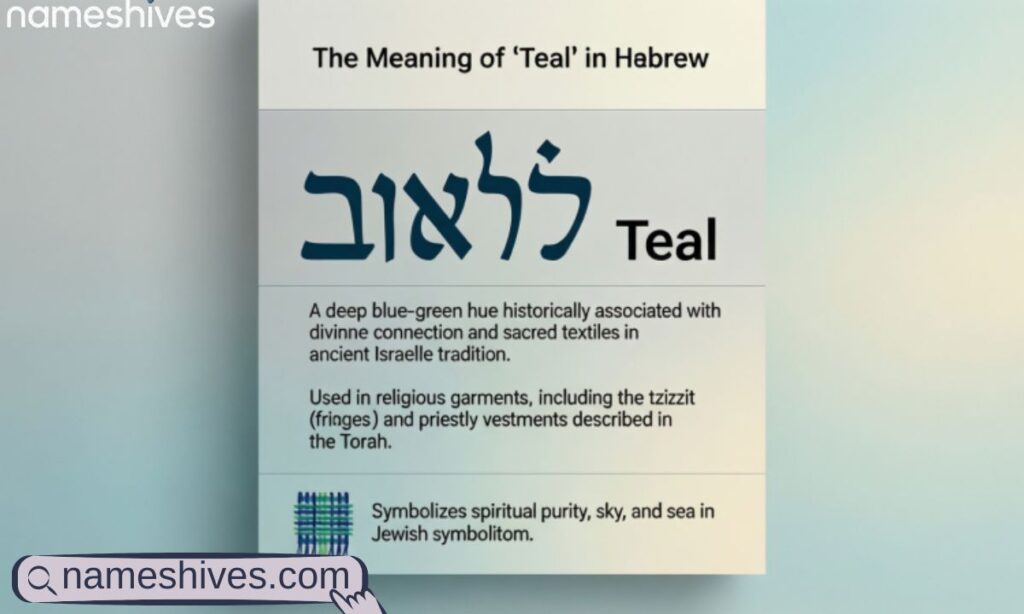
The name Teal does not have a direct Hebrew origin or translation, as it is an English name derived from the bird species and color term. However, in Hebrew, nature-related concepts and colors are expressed through various words that might capture similar essence. The closest Hebrew approximation for the teal color might combine words like “yarok” (ירוק) meaning green and “kachol” (כחול) meaning blue.
In Hebrew naming traditions, names often carry significant meanings related to biblical concepts, virtues, or natural elements, though Teal itself is not part of traditional Hebrew nomenclature. If someone named Teal sought a Hebrew name with similar natural and peaceful qualities, they might consider names like “Yonah” (dove) or names incorporating water and nature elements.
The practice of transliterating English names into Hebrew would render Teal as טִיל (pronounced similarly), though this carries no inherent meaning in Hebrew beyond being a phonetic representation of the English name.
Names Similar to Teal
- Cyan
- Azure
- Sage
- Jade
- Coral
- Pearl
- Ruby
- Amber
- Hazel
- Olive
- Violet
- Indigo
- Scarlett
- Ebony
- Ivory
- Sienna
- Umber
- Saffron
- Cobalt
- Sterling
- Ash
- Sky
- Ocean
- River
- Lake
- Bay
- Cove
- Brook
- Rain
- Storm
- Cloud
- Misty
- Dawn
- Eve
- Wren
- Lark
- Robin
- Raven
- Sparrow
- Phoenix
- Dove
- Finch
- Hawk
- Jay
- Crane
- Swan
- Merle
- Starling
- Falcon
- Iris
25 Popular Nicknames for the Name “Teal”
- Tea
- T
- Tealie
- Tee
- Teals
- Tealey
- T-Bird
- Tealy
- Tia
- Lea
- Tee-Tee
- Blue
- Blu
- Greenie
- Duckie
- Duck
- Peacock
- Ally
- Lala
- Elle
- Ellie
- Teela
- Teal-Bear
- Teacup
- Tealicious
Best Name Combinations with Teal

- Teal Alexandra
- Teal Elizabeth
- Teal Marie
- Teal Grace
- Teal Rose
- Teal Catherine
- Teal Louise
- Teal Victoria
- Teal Annabelle
- Teal Josephine
- Teal Margaret
- Teal Evangeline
- Teal Isabelle
- Teal Olivia
- Teal Sophia
- Teal Gabrielle
- Teal Madeline
- Teal Caroline
- Teal Beatrice
- Teal Charlotte
- Teal Penelope
- Teal Genevieve
- Teal Vivienne
- Teal Juliette
- Teal Rosemary
- Teal Seraphina
- Teal Clementine
- Teal Celestine
- Teal Magnolia
- Teal Lavender
- Teal Marigold
- Teal Primrose
- Teal Wisteria
- Teal Juniper
- Teal Harmony
- Teal Melody
- Teal Cadence
- Teal Symphony
- Teal Liberty
- Teal Journey
- Teal Aurora
- Teal Luna
- Teal Stella
- Teal Nova
- Teal Celeste
- Teal Skye
- Teal Winter
- Teal Summer
- Teal Autumn
- Teal Haven
- Teal Meadow
- Teal Willow
- Teal Harper
- Teal Quinn
- Teal Morgan
- Teal River
- Teal Ocean
- Teal Marina
- Teal Brooke
- Teal Jasmine
- Teal Dahlia
- Teal Iris
- Teal Poppy
- Teal Violet
- Teal Lily
- Teal Daisy
- Teal Briar
- Teal Fern
- Teal Ivy
- Teal Hazel
- Teal Ember
- Teal Phoenix
- Teal Raven
- Teal Wren
- Teal Sparrow
Frequently Asked Questions
What is the history of the color teal?
Teal has its roots in the early 20th century and is named after the teal bird, known for its blue-green stripe. It became popular in art and fashion as a calming, elegant color.
What does the color teal symbolize spiritually?
Spiritually, teal represents healing, balance, and emotional clarity. It is often linked to inner peace and spiritual growth.
Why is teal considered a calming color?
Teal blends blue’s calmness with green’s renewal, creating a soothing effect. This balance makes it relaxing for the mind and emotions.
What is the cultural significance of teal?
In many cultures, teal symbolizes protection, wisdom, and harmony. It is also seen as a color of sophistication and creativity.
How is teal used in different cultures?
Different cultures use teal in clothing, art, and decoration to represent balance and trust. It is often associated with calm and renewal.
What emotions does teal represent?
Teal is linked to feelings of peace, confidence, and emotional stability. It helps promote thoughtful communication and calm energy.
Is teal connected to any spiritual chakras?
Yes, teal is often associated with the throat and heart chakras. It supports honest expression and emotional healing.
Why is teal popular in modern design?
Teal is popular because it feels both fresh and timeless. Designers use it to create calm yet stylish spaces.
What does teal mean in psychology?
In color psychology, teal represents clarity, trust, and emotional balance. It helps reduce stress and encourage focus.
How can teal be used in daily life for positive energy?
Using teal in clothing or home décor can promote calmness and clear thinking. It helps create a peaceful and balanced environment.
Conclusion
Teal carries a rich history that blends the calm of blue with the renewal of green. Over time, it has been used in art, fashion, and design to express balance and creativity. Many cultures see teal as a color of depth and quiet strength. Its timeless appeal continues to grow across generations.
Spiritually, teal is linked with healing, clarity, and emotional balance. It is often seen as a symbol of peace, trust, and inner growth. Culturally, teal represents harmony between the heart and mind. Together, its history and meaning make teal a color that feels both soothing and powerful.

David Corner is a names expert with 4 years of experience in researching name meanings, origins, and cultural significance. He is currently working with Nameshives.com, where he contributes to creating insightful and meaningful name content for a global audience.
